Will 2019 be the year of clean meat?
We asked Paul Shapiro, author of the bestselling book Clean Meat, to help us formulate seven predictions for the upcoming year about this potentially revolutionary new type of food.
For the laymen, “clean meat” is a term used to indicate real meat produced by in vitro cultivation of animal cells, without the need to slaughter any animal.
The end of animal farming, or even its substantial reduction, would bring huge benefits to the planet, our health, and of course the lives of the 56 billion animals slaughtered annually for meat consumption.
Obviously, end-of-the-year predictions are always a game as much as a rational analysis, but that’s why we like them.
1) Kinder World: The biggest news
Paul Shapiro: Sales. There will likely be actual sales of clean meat by the end of 2019.
Actually, it might even happen before the end of 2018. There’s a company called Just that’s pretty confident it will sell at least clean meat samples by the end of the current year. Even if it will be just a symbolic, one-time event, it will still be important in that it shows there’s a government willing to authorize an actual sale today.
That may not be the “biggest” news, but I do think it’s important news.
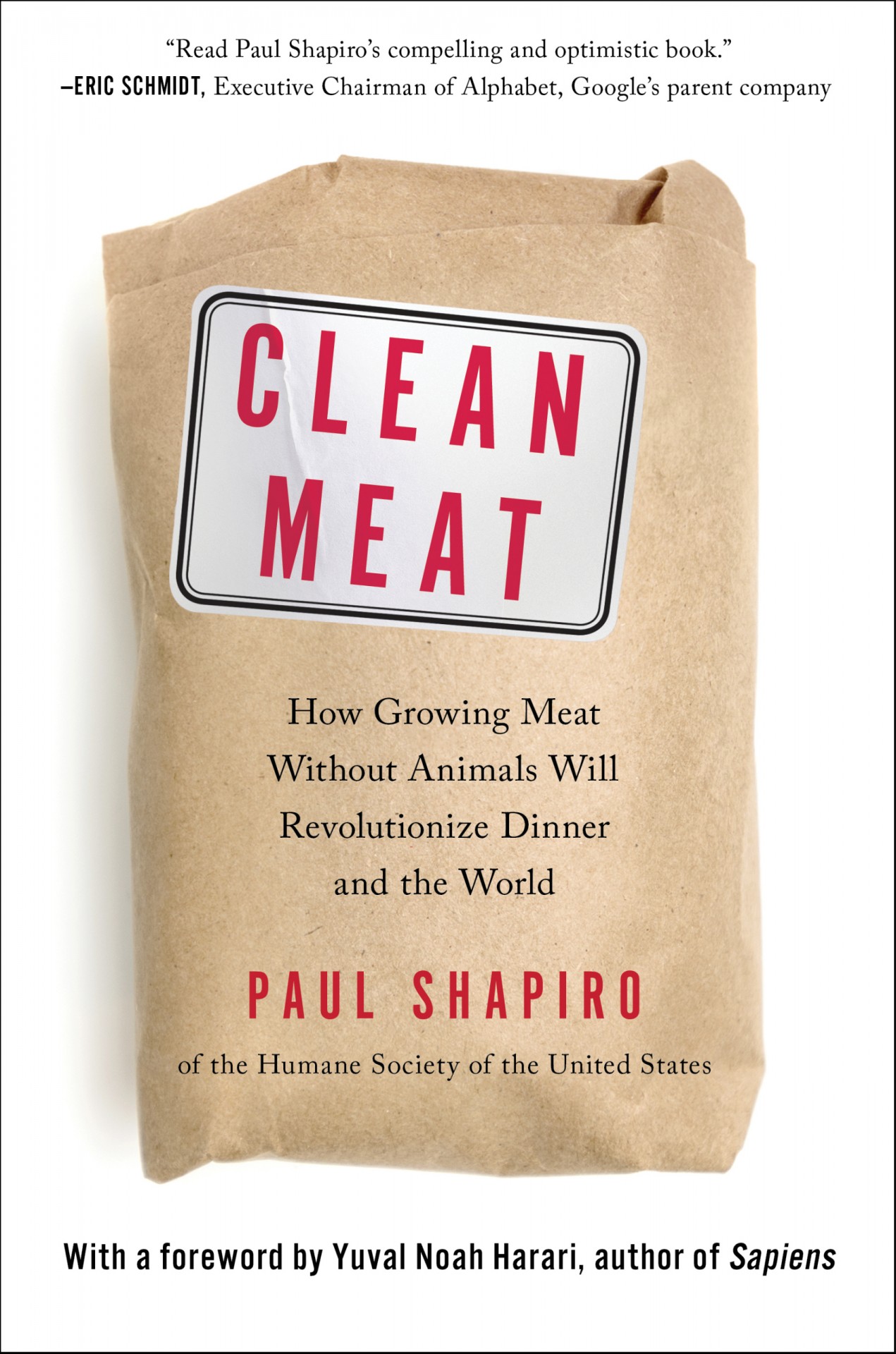
2) The country where clean meat will be sold first
If I had to guess, I’d say somewhere in Asia. However, I have to say that the US government has been impressively proactive in this field so far, with the USDA and FDA laying out an early framework for the regulation of cultured meat. I don’t think that there are other countries in the world whose governmental agencies have done the same.
The FDA and the USDA are doing exemplary work so far to position the United States at the forefront of this cellular agriculture revolution.
I also wouldn’t be surprised to see Israel further expand its leadership in clean meat. Between the meat industry’s investment in SuperMeat and the steak just produced by Aleph Farms, Israel really is in some ways a Mecca for the cultured meat world.
3) The biggest obstacle
Regulations that would be designed to protect incumbent livestock industries by stifling this type of agricultural innovation could potentially kill this industry before it’s even born.
There’s also the risk that the clean meat industry will start flourishing in certain countries while in others there will be just too many legal restrictions for companies to operate effectively.
4) Unexpected new players in the field
There are about two dozens companies trying to produce clean animal products at the moment and several of them have formed in 2018. Incumbents like Memphis Meats are doing very impressive work, and I don’t doubt that even more new, exciting companies will join the fray and form in 2019. Not all will survive. In fact, one of those founded in 2018 has already been put on ice.
But this promising field will continue to get bigger. And it will focus on a greater variety of products. For example, one of the companies I’m particularly excited about, Mission Barns, was founded in 2018 to focus just on producing clean fat, which I tried earlier in the year and loved.
5) Number of people that will have eaten clean meat by the end of 2019 (PS. I hope to be one of them)
I’d say that at the moment perhaps around 500-1000 people tried clean meat. With the actual figure being probably closer to the 500 mark, but it’s hard to tell. New Age Meats, for example, did a tasting of its (apparently delicious) sausage for 40 people this year, so the events where lay people get to try it are getting bigger.
By the end of 2019, and I’m gonna be really optimistic, I hope that maybe around 3,000 people will have sampled clean meat.
6) The type of clean meat that will be more successful
There will be a lot of focus on poultry and fish, especially fish, actually. If you look at the cost of producing clean fish with cellular agriculture - or cellular aquaculture as I should say - you see that it’s lower than the cost of producing, let’s say, clean beef.
One reason for this is that fish are cold-blooded animals. Therefore, you don’t need to keep your culture at as high a temperature like you have to do with mammals.
Moreover, some kind of fish, like the bluefin tuna, are already extremely expensive so the price tag of their clean alternatives might be quite competitive. Between Finless Foods, Wild Type, and Blue Nalu - all impressive companies that have raised millions each - there’s already a race to bring the first cultured fish to market.
7) Your own role in the clean meat movement
I’ll keep working as an advocate for this field, as an author, and an entrepreneur. I’m particularly enthusiastic about The Better Meat Co., the b2b company that I co-founded in 2018 that’s already working with clean meat start-ups. I’ll continue writing about the latest developments in this field, and will be touring in some other countries to promote my book Clean Meat in Asia and Europe as those new editions are released.
Speaking of which, over the past couple of years, there has been a big debate in the clean meat movement on how to actually call it. Eventually, the Good Food Institute concluded that “clean meat” is the expression that elicits the most positive response in potential buyers.
However, the expression doesn’t translate equally well in all languages. For example, I’m Italian and I’m pretty sure we’re never going to call it “carne pulita”. I was wondering how this aspect impacted the translation of your book’s title in different languages.
Yes, “clean meat” doesn’t work equally well in all languages, which is why in some countries the title of the book will be Cultured Meat (like in the Netherlands).
But, even in the United States, the matter isn’t settled. I’ve written a little about this but “clean meat” does seem both accurate and performs the best with consumers.
That said, there may be good reason to consider other options, and I’m certainly open to them. I now use “cultured meat” pretty often too. Some are using “cell-based meat.” “Clean meat” was never intended to be a regulatory term, of course, just as clean energy isn’t a legal term, either.
But I think the decision of what term advocates for the industry should use ought to be based on evidence of what’s both accurate and performs well with consumers. I’m not wedded to any particular term, and look forward to the research that the Good Food Institute and Mattson are doing on this important topic.
Sign up for our newsletter. Every week, our founder Mathys will send you the best stories about the world of doing good.
By now, most of us have heard that the use of plastics is a big issue for the environment. Partly fuelled by the success of the BBC’s Blue Planet II series, people are more aware than ever before about the dangers to wildlife caused by plastic pollution – as well as the impact it can have on human health – with industries promising money to tackle the issue.
Single use plastics are now high on the agenda – with many people trying to do their bit to reduce usage. But what if all of this just provides a convenient distraction from some of the more serious environmental issues? In our new article in the journal Marine Policy we argue plastic pollution – or more accurately the response of governments and industry to addressing plastic pollution – provides a “convenient truth” that distracts from addressing the real environmental threats such as climate change.
Yes, we know plastic can entangle birds, fish and marine mammals – which can starve after filling their stomachs with plastics, and yet there are no conclusive studies on population level effects of plastic pollution. Studies on the toxicity effects, especially to humans are often overplayed. Research shows for example, that plastic is not as great a threat to oceans as climate change or over-fishing.
Taking a stand against plastic – by carrying reusable coffee cups, or eating in restaurant chains where only paper straws are provided – is the classic neoliberal response. Consumers drive markets, and consumer choices will therefore create change in the industry.
Alternative products can often have different, but equally severe environmental problems. And the benefits of these small-scale consumer driven changes are often minor. Take, for example, energy-efficient light bulbs – in practice, using these has been shown to have very little effect on a person’s overall carbon footprint.
But by making these small changes, plastic still appears to be an issue we can address. The Ocean Cleanup of plastic pollution – which aims to sieve plastic out of the sea – is a classic example. Despite many scientists’ misgivings about the project and its recent failed attempts to collect plastic the project is still attractive to many as it allows us to tackle the issue without having to make any major lifestyle changes.
That’s not to say plastic pollution isn’t a problem, rather there are much bigger problems facing the world we live in – specifically climate change.
In October last year the Intergovernmental Panel on Climate Change (IPCC) produced a report detailing drastic action needed to limit global warming to 1.5˚C. Much of the news focused on what individuals could do to reduce their carbon footprint – although some articles did also indicate the need for collective action.
Despite the importance of this message, environmental news has been dominated by the issues of plastic pollution. So it’s not surprising that so many people think ocean plastics are the most serious environmental threat to the planet. But this is not the case. In 2009 the concept of planetary boundaries was introduced to indicate safe operating limits for the Earth from a number of environmental threats.
Three boundaries were shown to be exceeded: biodiversity loss, nitrogen flows and climate change. Climate change and biodiversity loss are also considered core planetary boundaries meaning if they are exceeded for a prolonged time, they can shift the planet into new, less hospitable, stable states.
These “clear and present dangers” of climate change and biodiversity loss could undermine the capacity of our planet to support over seven billion people – with the loss of homes, food sources and livelihoods. It could lead to major disruptions of our ways of life – by making many areas uninhabitable due increased temperatures and rising sea levels. These changes could start to happen within the current century.
This is not to distract from the fact that some significant steps have been taken to help the planet environmentally by reducing plastic waste. But it is important not to forget the need for large-scale systemic changes needed internationally to tackle all environmental concerns. This includes longer-term and more effective solutions to the plastic problem – but also extending to more radical large-scale initiatives to reduce consumption, decarbonise economies and move beyond materialism as the basis for our well-being.
The focus needs to be on making the way we live more sustainable by questioning our overly consumerist lifestyles that are at the root of major challenges such as climate change, rather than a narrower focus on sustainable consumer choices – such as buying our takeaway coffee in a reusable cup. We must reform the way we live rather than tweak the choices we make.
There is a narrow window of opportunity to address the critical challenge of, in particular, climate change. And failure to do so could lead to massive systemic impacts to the Earth’s capacity to support life – particularly the human race. Now is not the time to be distracted by the convenient truth of plastic pollution, as the relatively minor threats this poses are eclipsed by the global systemic threats of climate change.
This article is republished from The Conversation under a Creative Commons license. It's written by Rick Stafford Professor of Marine Biology and Conservation at Bournemouth University and Peter JS Jone Reader in Environmental Governance at UCL. Read the original article here.
In 2018, the Rijksmuseum – the Amsterdam-based national museum dedicated to art and history of the Netherlands – welcomed more than 2.3 million visitors.
This doesn’t come as a surprise to me. My office is at a stone’s throw from the Rijksmuseum and when I pass by (or, as it’s often the case, cycle by), I always see throngs of tourists making their way to the museum’s entrance.
But 200 years ago, when they started to spawn across Europe, national museums weren’t founded just to issue entrance tickets. They were also established to celebrate national pride, to represent the DNA of national identity.
At the time, nation-states were emerging from the ashes of ancient regimes and decaying empires. Nationalism was a propulsive force of progress and political development.
At the opposite, the comeback of nationalism in contemporary Europe is under the sign of conservatism. The nationalist political parties of today’s Europe fight against the disruptive force of new political institutions like the European Union.
What can then be the role of national museums in this time of rampant nationalism? What’s left of “national” in contemporary national museums? And, more in general, how can national museums remain relevant in today’s society?
To address these questions, I reached out to art historian Martine Gosselink, who has been acting as head of the Rijksmuseum’s history department since 2009.
As I mentioned, I work really close to the museum, so it was easy to drop by at Martine Gosselink’s office to pick her brains about these matters.
For clarity’s sake, I divided the interview into three parts. First off, we discussed how and why the Rijksmuseum was founded. Afterward, Martine Gosselink described what she thinks is the role of national museums in contemporary society. And finally, we discussed the much-awaited exhibition on slavery in the Dutch colonial period that will open at the Rijksmuseum in September 2020.
Davide Banis: I read that the Rijksmuseum was established in the year 1800, seven years after the Louvre. Can you explain how was it founded, who was involved, and what was the purpose of this new museum?
Martine Gosselink: What was founded in 1800 was the National Art Gallery, that was the precursor of the Rijksmuseum.
The actual Rijksmuseum was founded a few years later, under Louis Bonaparte, Napoleon’s brother and king of Holland at the time.
The museum changed location several times until, in 1885, it arrived here, in the palace where it has been ever since.
You have to imagine that this area, at the time, was sort of an empty desert: no houses and no people. Maybe just some cattle in the fields around here.
After centuries of protestant domain, Catholicism was regaining power in the Netherlands during those years. And that’s why the building reminds of a Catholic cathedral, with the mosaic floor and the stained glasses. If you look at other national museums built in Europe during the same period you’ll see that, at the opposite, they look like Greek temples…
The god of this museum-cathedral is our national hero, Rembrandt. The whole museum is built around him. Interestingly, Rembrandt became the Dutch national painter only in the 19th century.
Before Rembrandt, our national painter was Pieter Paul Rubens but, in 1830, Belgium declared its independence from the Netherlands and they ‘took’ Rubens with them. So, we had to come up with a new national painter and we picked Rembrandt. He has been iconized.
50 meters from my office there’s the Night Watch, one of Rembrandt’s masterpieces. Of all the 8,000 objects of the collection, this painting is the only one that has never been moved, that has never been relocated. It’s also in this sense that the museum is literally built around Rembrandt.
As you said, when the Rijksmuseum moved here, this area was the countryside. 200 years down the line, everything changed. How did the museum evolve over the centuries?
Yes, everything changed but the collection has remained merely the same, besides numerous acquisitions. What changed is the way we look at the objects. If you move an artwork only 30 degrees, it tells a completely different story…
In general, during the 20th century, the Rijksmuseum played an important role in shaping our national identity. People were visiting it as part of their civic education.
Differently from other important museums, the Rijksmuseum is “national” also in the sense that almost all the objects are made in the Netherlands. And in this sense, it’s pretty unique.
But I think it took a while for Dutch people to fully realize how national this museum is. I myself only understood it when I started working here, in 2009.
At the time, the museum was in refurbishment. Dutch society was coming from a decade of turmoil, also because of the murders of politician Pim Fortuyn in 2002 and of director Theo Van Gogh in 2004.
There was a big debate going on around the issue of Dutch identity.
At the same time, it became evident that what was at display here represented mainly the governing elite, just a thin layer of Dutch society throughout the ages. The objects about the everyday life of normal people went to other Dutch museums.
In particular, the colonies were my main concern. They form a big part of our history and, of course, only if you understand colonial history you can understand how the Netherlands became the Netherlands.
We do have beautiful and powerful colonial objects in our collection but, at the time, they weren’t very well explained and there were small texts to describe them. Better than nothing, but not enough.
So we came up with the idea of publishing a series of books about the relationship between the Netherlands and its colonies. The purpose was to recollect awareness about history and our self of the past. And maybe just to explain why we do have those objects in the first place.
I think the books were are helpful to understand our colonial history and an important step at trying to make every single Dutch person with roots in one of those countries feel welcomed in the museum.
So, to go back to your question, I’d say that one of our roles in this time is to make everybody feel at home, to be here for all Dutch people (and, of course, for the many, many tourists, that goes without saying).
And, in doing so, to look beyond our contemporary national borders and realize that there’s also a mutual, transnational heritage that is important to display.
For example, you can also make an exhibition together with another country’s museum, and that’s what we’re doing with the Indonesian National Museum in Jakarta at the moment.
In 2020, an exhibition on slavery will open at the Rijksmuseum. I read that the exhibition will focus on slavery in the Dutch colonial period, spanning from the 18th to the 19th century and that the aim is to testify to the fact that slavery is an integral part of Dutch history and not just a dark page that can simply be turned and forgotten about. How did this exhibition come together? And can you elaborate more on what do you think is its purpose?
I hope that the exhibition will raise a debate about the role slavery played within all layers of Dutch society. And that it will be a way to honor the enslaved people.
What we’re trying to evoke is awareness, never a sense of guilt. This is very important to emphasize. Awareness that slavery is something not that far from us, that it is part of our history, that the sugar Dutch bakers used until the 19th century came from plantations enslaved people worked at.
More in general, historical awareness of what this structural system based on violence, aggression, and de-humanization represented at the time.
To go back to your first question, we first started thinking about this exhibition in 2010.
2021 will be the 400-year anniversary of when the Dutch West India company was founded. In 2002 we made an exhibition titled “The Dutch Encounter with Asia 1600-1950”, and we thought of making a follow-up exhibition in 2021: “The Dutch encounter with America’s”. And, of course, slavery would have been an important part of it.
But then the museum’s director said: “Why don’t we dedicate the whole exhibition to slavery?”
“But how can we make an exhibition without objects?”, I thought. The enslaved people didn’t own anything.
The director challenged us to try it anyway, and that’s how we got started.
And, final question, what are other exhibitions you’d like to work on in the future?
I like the concept of “tolerance” and of the Netherlands as a “tolerant country”. But tolerance can also mean indifference: “I tolerate you because I can ignore you”. It’s almost like there’s a “practical tolerance” and an “ethical tolerance” and they are two quite different things. I’d like to work more on this twofold concept with an exhibition.
And of course, I want to keep working on all the other exhibitions, dedicated to more usual chapters of Dutch history.
Sometimes people ask me whether I feel negative about our Dutch national history but I say no, not at all. I’m very proud of the Netherlands and to be Dutch. It’s just that we have put some layers of varnish on our history and it’s time to remove them.
Credit header image: John Lewis Marshall for the Rijksmuseum
This article was originally published on Forbes.com
‘Zero-Rating’— the commercial practice whereby an internet service provider (ISP) doesn’t count the use of an app or service against your monthly data cap — has come under renewed scrutiny earlier this month when a study by digital rights organization Epicenter.worksfound that countries that allow its use see average data prices increase over time.
The study, which compared 30 European countries, adds to an ongoing discussion over zero-rating schemes.
The practice is accused of leading to additional costs for the consumer but also of hampering net-neutrality, the principle that ISPs should treat all transmission of data equally.
Evidently, if a service provider offers its customers the possibility of using an app under a zero-rating formula, it’s discriminating other apps. And, obviously, only larger corporations (like Facebook or Netflix) are usually able to sustain zero-rating deals with ISPs.
The debate over zero-rating is crucial in the Western context, as highlighted by Epicenter.works’ research, but it’s even more important in the developing world where the Internet is less accessible and more expensive.
In a country where there’s a low Internet penetration rate, zero-rating practices can become particularly predatory.
Think of what happened when Facebook launched its zero-rating offer in India back in early 2015. Camouflaged as a philanthropic endeavor under the domain ‘Internet.org’, zero-rating Facebook was part of Zuckerberg’s masterplan to get millions of new users online, making them believe that Facebook and the Internet were the same thing.
The pernicious idea was simple: if you can’t pay for Internet access, you’ll rely solely on Facebook’s free services and you’ll end up believing that Facebook is the Internet.
Fortunately, India’s national telecoms regulator banned the practicein 2016 but in many countries similar schemes still thrive.
Zuckerberg always hailed the practice as a charitable mission, promoting it under the lofty tagline “connectivity is a human right”.
Undeniably, such pronouncement has a certain appeal. And even Wikipedia fell for it. Already in 2012, the Wikimedia Foundation launched Wikipedia Zero, a zero-rating program aimed at spreading free knowledge in the developing world.
However, accused of violating net-neutrality rules and dubbed as “digital colonialism”, the Wikimedia Foundation dropped the program in 2018.
The thing is, rather than spreading knowledge, zero-rating offers are often vectors of misinformation.
Look at what happened in Brazil during the political elections last October. As highlighted by professor Luca Belli in an article for The Conversation, most Brazilians have unlimited social media access thanks to zero-rating plans, but very little access to the rest of the Internet because a broadband connection is still very expensive.
The outcome is that, when fake news go viral on social media or messaging services like WhatsApp, most of Brazilians don’t even have the possibility to fact-check them on the Internet.
At first sight, zero-rating offers look like a sweet deal for consumers and a noble effort to connect the world, but beyond appearances, they’re just a nasty business practice that distorts competition and cripples Internet access in the developing world.
The header image is a picture of the literacy app hackathon that took place in Addis Abeba in 2015. Credit: Beyond Access